Friday Roundup: Updates and BAR Notes

Oops! If you tried to download the newsletter last week, the file only partially uploaded. The full spring newsletter is now available. Thanks to Dave for spotting the issue!


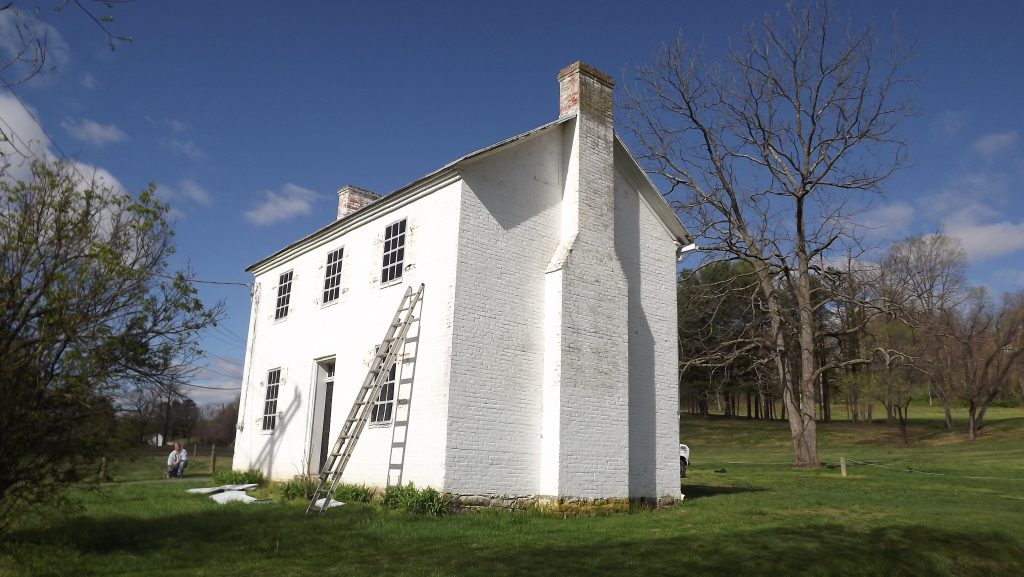
This week the roof at the Hexagon House got some TLC. We learned during the evaluation process we still have a real tin roof. Although we don’t recommend hanging on to paint cans for this long (keeping your paint swatches and color mixing instructions are sufficient and less hazardous), we were also able to color match the paint from the 1997 work. Our roof looks as good as new. Many thanks to the MSV and Winchester Roofing for helping to keep a roof over our heads (literally)!


As you may have heard, on April 6 there was a Board of Architectural Review application for 119 S. Washington asking for retroactive approval of work done to the exterior of the home, including door replacement and alteration to the fence and walkways. Not all the items were addressed at that meeting, which was continued in the April 20th meeting. As is usual in cases like this where work is done and then it seeks retroactive approval, it is PHW’s position that the work should be evaluated as if it is a fresh application and the design guidelines applied as usual. This was not a case where an owner or tenant could claim ignorance of the BAR process, as he had applied numerous times before for other exterior changes.

This was certainly an unfortunate situation, as certain items (such as the fence and gate “piers”) were approved in a completely different manner that was in line with the historic documentation of the building. PHW was under the impression the owner was aiming to restore the appearance of the home as documented in some ca. 1905 images; the original approvals would have been in line with this work. We understand the most historically-inaccurate of the changes to the sidelights around the front door will be brought back to the BAR at a future meeting with a revision; at this point there is not information on exactly what the sidelights may look like.

The changes to the fence are certainly not our preference from a historic perspective, and while we understand the decision made at BAR it does not make what happened in any way right or excusable. As we often say in cases of demolition, once an item is removed from a home, it is very difficult to restore it; matters become even more complicated when the work encroaches on city sidewalks and rights of way. Removing these items can impact your ability to restore them at a later point.

We also would urge residents in the historic district to embrace some of the quirks of their homes and properties. It is unlikely you will find a perfectly square lot and a perfectly centered house; the quirkiness is part of what attracts many people to older homes. To try to perfect something that has already aged gracefully tends to lead to a feeling of artificiality – certainly the opposite of what we want to encourage in a historic district.

As you think over this situation, we encourage those who have only heard this described second or third hand to review the meetings in question. You may watch the meetings for April 6 and April 20 online through the City’s website and draw your own conclusions. Much of the BAR process relies on good faith cooperation between applicants, staff, and the volunteer board. This was definitely one of the more stressful BAR meetings of recent times, and we thank the City staff and BAR members for working through a very complicated situation to the best of their abilities.
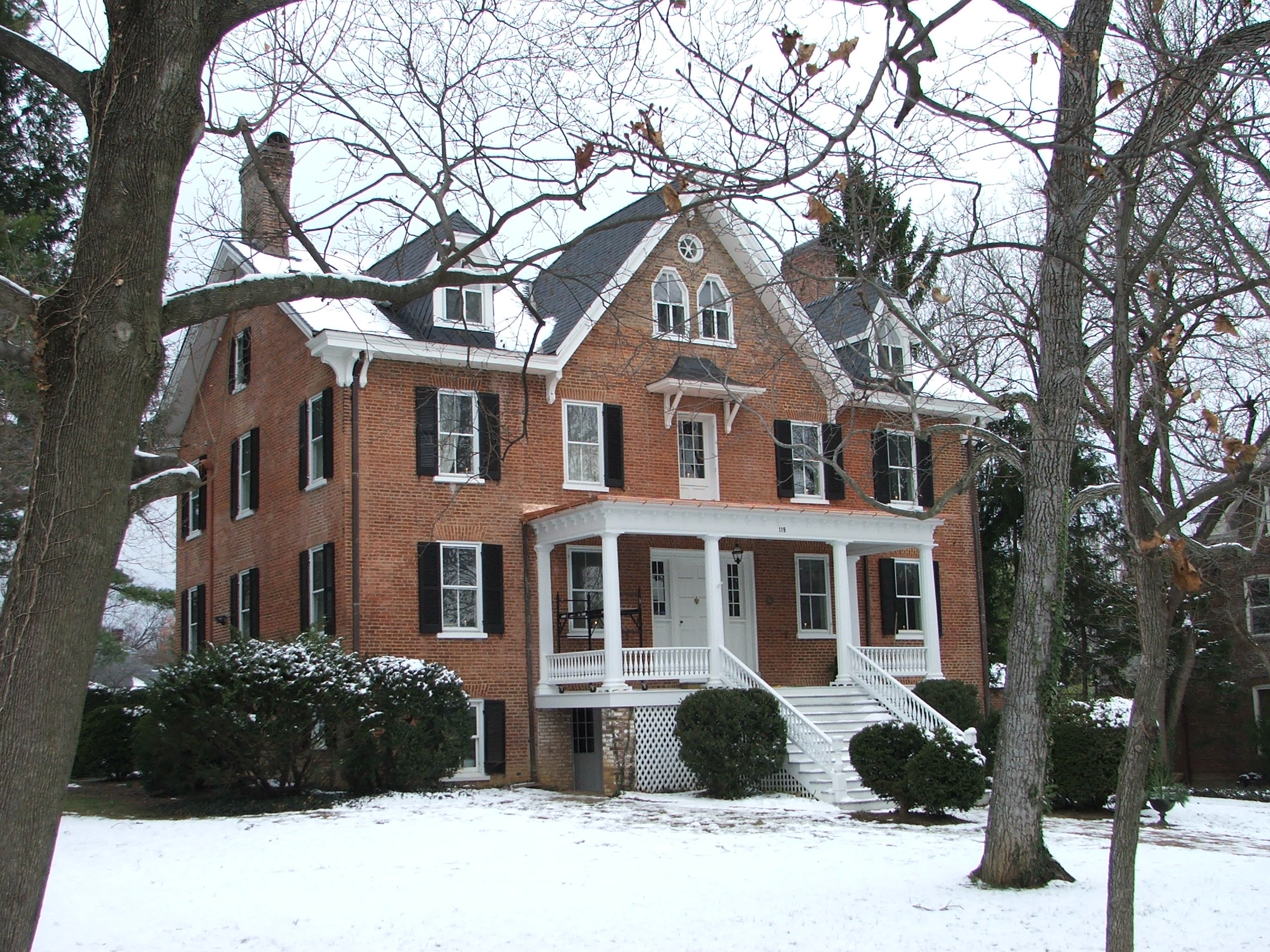

119 S. Washington St. as seen during the 2007 Holiday House Tour.

Friday Roundup: Loudoun Street Update

We would like to share an update on yesterday’s Board of Architectural Review public hearing on demolition. The row of townhouses at 514-520 South Loudoun Street was approved for complete demolition last night, citing safety concerns for the structures. There had been some hope to try to save the front of the homes with their ornate woodwork, but closer investigation revealed they were all heavily rotted. Rehabilitation would involve almost every piece of the building being repaired or replaced. It was acknowledged it could be done, but the end result would, in effect, be a new structure.

The ability to sell the property as the alternative to demolition by the city was brought up, but allegedly this option was not available in the blight remediation per the court process. The reasoning given was that by selling the property, the blighted condition would not be remediated (even if it was sold to an entity willing to undertake rehabilitation or demolition). The property is not currently going to be changing ownership.

This is definitely a loss for the historic district on multiple levels. We know a number of people were hopeful there was some process to get the buildings into new ownership for an investigation of rehabilitation. At this point it seems unlikely any new construction will happen on that lot for the foreseeable future. The parcel is planned to be seeded with grass post demolition. The only small consolation is that the structure will not be in place to continue posing a risk to its adjoining neighbors.

If you would like to review the submitted documents from the meeting, they may be found on the city’s website.

Friday Roundup: Loudoun Street Demolition

We know a few of our readers are following the Gavis properties action. It appears a public hearing for demolition of 514-520 S. Loudoun is on the agenda for the Nov. 3 Board of Architectural Review. PHW has requested further information about this item but we do not have additional insights to share at this time. If you are interested in speaking, the event will take place at 4 PM in Rouss City Hall, or comments may be submitted in writing to the city before the meeting.

Friday Roundup: South Loudoun Street Demolitions and African American Genealogy

PHW has reviewed the preliminary structural reports for 411 and 514-520 South Loudoun Street this week. From our reading and conversations, we believe 411 South Loudoun is able to be rehabilitated following some selective (not total) demolition to the rear of the structure. The main block of the house facing Loudoun Street appears to be relatively sound and the issues found are common enough to correct. The rear wing is more deteriorated primarily through water damage, but reconstruction or a new addition to the rear of historic buildings is an acceptable and common way to repurpose historic buildings for new uses and needs.

514 S. Loudoun
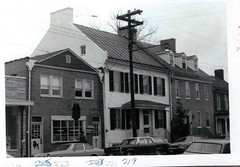
514-520 S. Loudoun, circa 1976

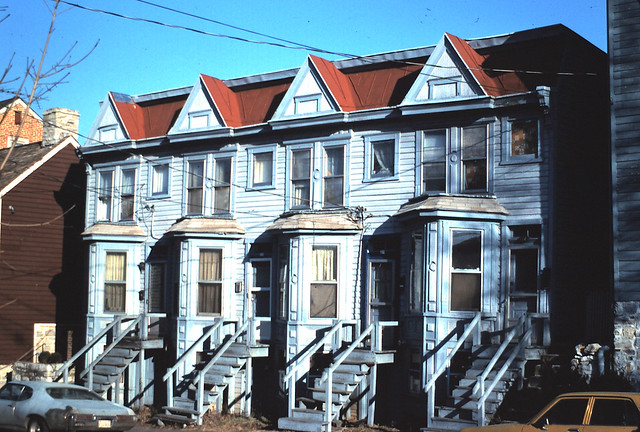
The townhouses at 514-520 South Loudoun are more deteriorated, but we would like more information from the completed structural reports. Again, it sounds like water and lack of maintenance were the primary sources of deterioration. One of the issues we have circled back to many times at PHW during discussions involving these properties is the unique character of the townhouse facades. While there are a few townhouses of a similar style in Winchester, none have quite the same “San Francisco” feeling as these units with their walk-in basements. One idea that may be worth exploring for the townhouses is a facadectomy, wherein the facade (the most architecturally interesting portion of the building) is retained, and an entirely new structure is built behind. This approach may be particularly useful in this case because the interior of the building may be difficult to work with for modern conveniences, as the units are reported to be very narrow, dominated by staircases, and the rooms quite small inside.

In either case, for both structures, there is no plan by the applicant to rebuild. Philosophically, PHW is opposed to demolition that leaves holes in the streetscape. Given the slow pace of action of these properties throughout almost the entire existence of PHW as an organization, we have little hope should this demolition be approved that anything will be built on this land within the next fifty years. We urge the applicant to finally relinquish these properties to other entities who are willing and able to proceed in meaningful action instead of continuing a slow and painful demolition by neglect.

If you would like to make a statement on these properties, the public hearing for demolition is scheduled for August 18, 4 PM at Rouss City Hall.


In other news, we also watched this presentation from the Thomas Balch Library on African American Genealogy this week. While this is focused on Loudoun County and some of the search resources are not available for Winchester, it can provide ideas for alternative lateral research avenues. If you are on the hunt for more information, you may wish to check out the Virginia Untold website to start or flesh out your search.

South Loudoun Street Demolition Request

A notice was posted in Thursday’s Winchester Star for the proposed demolition of structures at 411 and 514-520 South Loudoun Street for the August 18 Board of Architectural Review, 4 PM at Rouss City Hall. We are awaiting further clarification at the time of this post, but we will follow up with additional information when/if it becomes available.

South Loudoun Street
514-520 South Loudoun Street, circa 1976

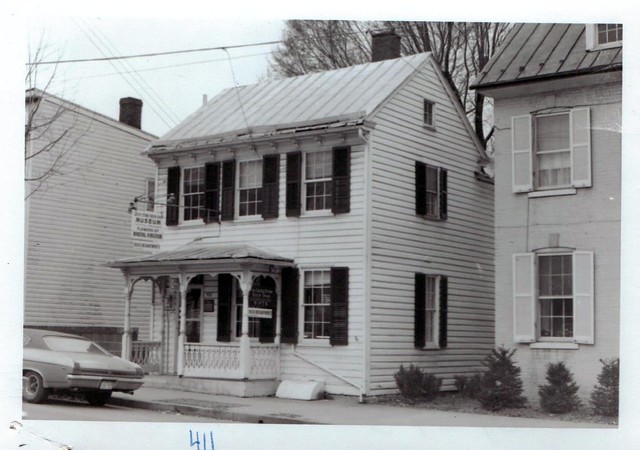
Both structures are deemed architecturally contributing to the Historic District, and PHW has received word of several people who would like further investigation into the ability to rehab these structures. 411 S. Loudoun (believed to date to the 1860s through deed research, with likely late 19th century porch embellishments) is a typical Winchester vernacular house, similar to many others that were bought, resold, and restored in the Potato Hill neighborhood. The houses at 514-520 S. Loudoun may be the last intact frame Queen Anne style rowhouses left in the Historic District, possibly due in part to their relatively late construction date of 1903.

South Loudoun Street
411 South Loudoun St., circa 1976

PHW’s preference is always to attempt rehabilitation for our contributing Historic District properties, particularly if there are people willing to undertake the work. As we have seen through PHW’s Revolving Fund and other private investments over the years, some truly astounding work can be accomplished by motivated and dedicated individuals. We hope that whatever entity undertakes the necessary work on these properties will do so in a manner sensitive to this special neighborhood and its plethora of early historic homes.

Friday Photos: Bough and Dough Shop, Clowser House Painting, and Baker Street Mural

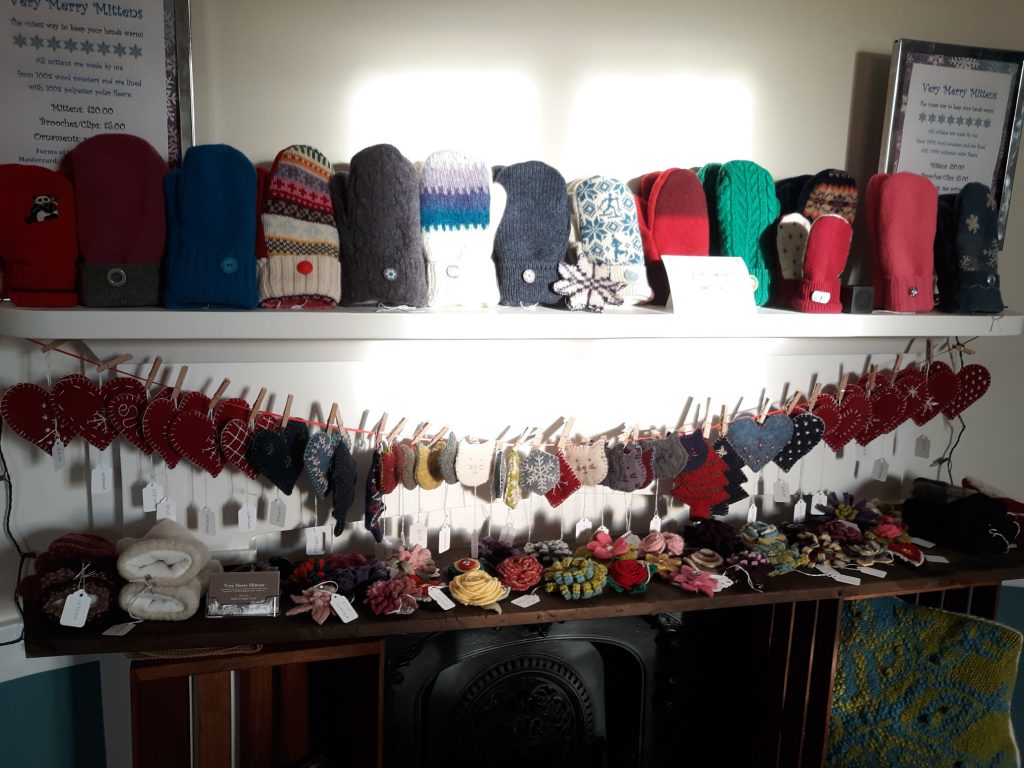
Happy Friday! While uncertainty abounds for our Holiday House Tour and Bough and Dough Shop for 2020, we wanted to share images of the 2019 shop to potential and returning vendors. We will be contacting past vendors soon with our tentative plans to host the Shop in 2020. If you are interested in joining the Shop as a new artist, please reach out to us at PHW at phwinc.org@gmail.com for an artist packet. You can find a selection of 113 images of the shop setup in 2019 at our Flickr album.

The Very Merry Mittens display in the Bough and Dough Shop, 2019.

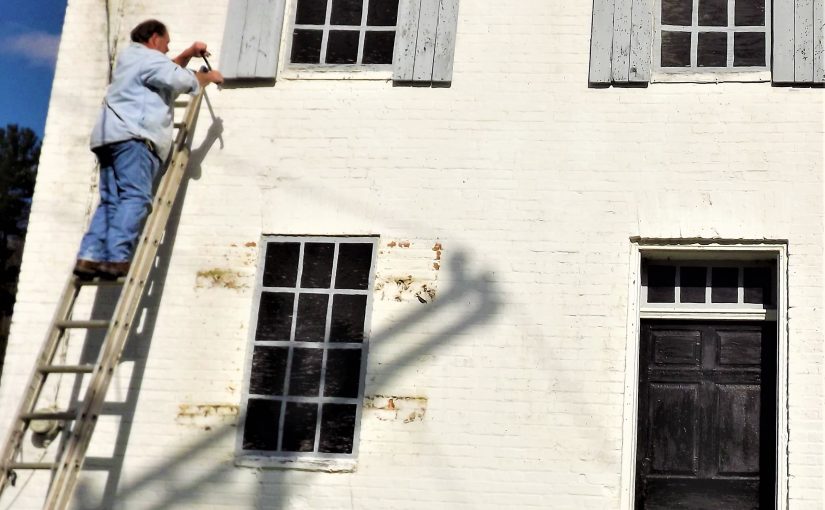
Larry Webb also shared images of work taking place at the Clowser House in Shawneeland recently. The pictures show the beginning the exterior painting by removing the old shutters. A new front door and new shutters for all the windows will be installed once the house is painted. George Sobien, the Property and Preservation Committee Chairman, is pictured performing the work. View the nine images at the end of the Clowser House album at Flickr.

Painting at the Clowser House, April 2020.

Last, in preservation news, the public hearing for additional demolition requests around the former Winchester Towers site and the former Glaize Lumber yard and Baker warehouses was approved at Thursday’s Board of Architectural Review. In a glimmer of hope, however, a portion of the wall with the ghost signs for Baker and Co. Wholesale Groceries may be incorporated into the final project. No details on exactly how the former advertising may be incorporated were available at the meeting yesterday, but we hope to see them in future BAR applications. If you like the look of ghost signs and wish to learn and see more, visit the American Ghosts website, which has catalogued and photographed unusual and iconic signs around America. The Baker Street wall is included in the database.

https://flic.kr/p/vp867T
This portion of the wall on Baker Street may be preserved and incorporated elsewhere in the project for the former Winchester Towers site.

Friday Roundup: Events and Tidbits

Formal garden, Colonial Williamsburg
Thanks to commenter Sarah Yi on Flickr, this unmarked slide in PHW’s collection has been identified as most likely being a garden at Colonial Williamsburg. Learn more about the gardens of Williamsburg here.

Looking for something to do this weekend? This Saturday is the 7th annual Chocolate Escape in Old Town Winchester. Look for red balloons at participating businesses between 2-5 p.m., or find more information at the Old Town Winchester site.

The French and Indian War Foundation invites you to celebrate George Washington’s 288th birthday with them on Friday, Feb. 21, 5:30-8:30 PM at the Half Note Lounge in the George Washington Hotel, 103 E. Piccadilly St. This free event is open to everyone. A cash bar and appetizers at $20/plate will be available.

A monument at the site where Turner Ashby was mortally wounded in the Civil War was vandalized recently in Harrisonburg. Regardless of your thoughts on the vandalism, cleaning and restoring historic structures and monuments from paint vandalism is especially laborious. If you find yourself in a similar situation, you may wish to investigate the technical briefs Removing Graffiti from Historic Masonry and Preserving Grave Markers in Historic Cemeteries. The National Center for Preservation Technology Training also has a few blog entries dedicated to graffiti removal and sacrificial coatings for stone monuments (marble specifically for the study linked in the blog).

The Trapezium House was an unusual find in our news feed this week. Similar to theories we’ve heard about the Hexagon House, the house in Petersburg was built without parallel walls in an attempt to make the building free of evil spirits who would become trapped in the corners. A bit more history and images are available at Clio.

The Board of Architectural Review will have multiple positions opening at the end of April this year. If you are interested in joining the board, or another city commission, the online application can be found at the city’s website.

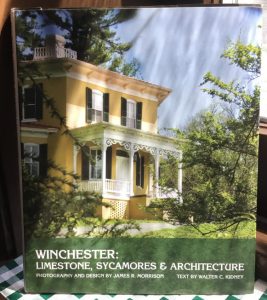
The new cover for Limestone features the Hexagon House. Copies are available for purchase for $25 plus tax at the PHW office, Winchester Book Gallery, or the Gift Shop at the Museum of the Shenandoah Valley.

Mark you calendars tentatively for April 3 and 4, when we hope to host a book launch party and sale weekend for the revised copy of Winchester: Limestone, Sycamores & Architecture. In addition to those books, we hope to have a small book sale of other new and used books (including copies of Why Old Places Matter) and magazines relevant to local history and architecture. If you have books or magazines in good condition to donate as you downsize your collections, stop by the Hexagon House between now and April. Sandra will be happy to look over your items and see what is suitable for the sale. More information will be finalized and available soon!

Friday Roundup: Celebración Winchester, Meditations on BAR

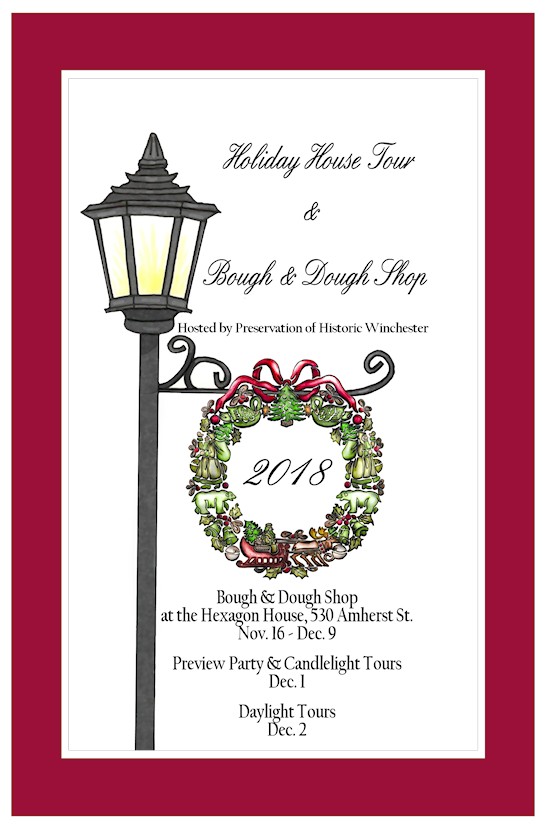
Out and about this weekend? Stop by the downtown to catch up with PHW at Celebración of Winchester on Sunday, September 23, 11 a.m. to 6 p.m. A PHW board member or two should be around with an assortment of goodies, including a hot off the press early run brochure for the Bough & Dough Shop. We expect to have the Featured Artists portion of the PHW website updated later today or early next week so you can start exploring some of the amazing vendors and items we will have at the Hexagon House in November and early December.

221-223 South Loudoun StreetYesterday’s Board of Architectural Review meeting was a heartening experience after a tough few months of fighting for historic preservation and compromise as the accepted and useful strategy for dealing with problem buildings. Earlier this year, a new developer came to BAR with a plan for the Guitar Studio building on South Loudoun Street. It is a building of the recent past that attained contributing status in the latest architectural survey. Compared to the similarly-aged commercial buildings of the 200 block of East Piccadilly, this building truly is vernacular and of no discernible architectural style. It was likely built in the late 1940s, replacing an earlier frame building of about the same footprint. At some point between construction and the 1976 survey, some “colonial touches” were added that muddled the exterior appearance and “read” of the building.

During the initial BAR meeting in May, a number of the proposed changes were not in keeping with the Winchester BAR Design Guidelines. The majority of the application was tabled while PHW and the owners did some investigation of the building history and reading up on the BAR design guidelines. The applicants returned last night for a conceptual review, having read up, learned more about their building and researched more proposed products. The applicants were very open and excited to bounce ideas off the BAR members and solicited suggestions for further improvement before the application comes up for a full vote.

In the end, the applicant will likely have a new storefront more in line with a 1940s commercial building rather than trying to hang on to some oddball features to make a commercial building look residential. The longtime business resident is not being displaced. Opportunities for increased and improved residential density as well as proactively mitigating concerns is being addressed now rather than later. A situation that could have turned sour and confrontational was instead a pleasant experience of opening new possibilities, compromise and excitement for everyone involved. We are looking forward to seeing a “final product” application for this building.

We hope other applicants approach the BAR process with this same open mindset and willingness to compromise and explore various options. Again, we cannot stress enough how helpful a conceptual review discussion is both for the applicant and the Board of Architectural Review, and we encourage anyone considering a large and involved project to take advantage of this service before becoming married to an idea that may not work well with the Historic District.

Learn more on the city’s website about Winchester’s Historic Districts and Board of Architectural Review.


Friday Roundup: PHW Office News and Hurricane Preparedness

Friday Roundup Thanks for bearing with us on a tough week in the preservation world. As you have likely heard, all of the BAR appeals on Tuesday were overturned, which opens the door for demolition of the Kent and Piccadilly corner. No Certificate of Appropriateness will be issued for the next thirty days. The developer had also previously stated at the City Council work session no buildings would be demolished until plans were finalized. There is also a further appeal process open to PHW should we choose to exercise it. Above all else, we hope to have productive meetings with city staff both for this project and any others in the future that involve our irreplaceable architectural resources. Public input, consultation, and collaboration with stakeholders and residents should always be a priority, especially in regards to large scale projects the Historic District.

We would like to thank councilors Willingham, Willey, McInturff, and McKannan for their position to retain the James Barr house at 206 N. Kent St., as well as McKannan for his support in seeing the historic value in the old Central Garage at 202 E. Piccadilly.

With the unpleasant business portion of our weekly recap complete, I would like to thank all the artisans who have filled in applications or expressed interest to the personal invitations to the Bough and Dough Shop. We are near our space limits for interior artisan setup as of this week. We are still open for a live greenery artist for after Thanksgiving to the end of the event, but all other slots appear filled or are in talks to be filled now. The applications will remain up on the website just a bit longer, and printed copies will remain available at the PHW office. New applicants will be retained on our call back list in case of last minute changes or spaces becoming available. Again, thank you all so much, and I hope we will have some fantastic new and unique items for our shoppers this year!

As you can imagine, we ran behind on getting our Holiday House Tour program booklet advertising material together, but the hard copy letters to past sponsors and those who have expressed interest are going out this week. If you would like to advertise your business, please get in touch and we will provide you the information. We are also very willing to help you design your ad or make sure it will work with our printer, so please feel free to contact us at phwinc.org@gmail.com for further information. The deadline for securing an advertising spot is October 31.

With the weather this weekend and into next week threatening us with even more rain, we would like to direct anyone with flooding or water penetration issues to our blog post highlighting a list of resources compiled by Preservation Maryland in our May 18 blog post. You may also want to review these checklists and documents for hurricane preparedness:
Hurricane Preparedness for Maryland’s Historic Properties
Hurricane Preparedness and Recovery for Owners of Historic Properties
Hurricane Preparedness For Old Houses
Hurricane Preparedness: Are You Ready?
Avoiding Hurricane Damage: A Checklist for Homeowners
We hope the worst of the storm passes us by, but we want to be prepared for the worst. Stay safe and dry, everyone!