Friday Roundup: A Little Weekend Reading

https://flic.kr/p/R3SLGZ
Found! This article was alluded to at the end of Sandra Bosley’s presentation on the Conrad House in the Godfrey Miller House summer lecture series last year. You might remember that we were unable to find the article to confirm details prior to the presentation. The article turned up last week in an unexpected spot. If you want a little backstory on how this door was saved and placed in the Joint Judicial Center, we finally have it for you!

Why America’s New Apartment Buildings All Look the Same via Bloomberg As the subtitle adds, “cheap stick framing has led to a proliferation of blocky, forgettable mid-rises—and more than a few construction fires.” The article, despite the somewhat alarmist headline, is a realistic look at the new development encroaching on our historic districts and urban centers.

Are you interested in a hands-on preservation career? There will be positions opening soon in the Traditional Trades Apprenticeship Program (TTAP) through the National Park Service near us. TTAP provides hands-on, historic preservation trade skills training during an intensive six-month learning-while-working experience. Upcoming positions will be available at Manassas National Battlefield Park, Gettysburg National Military Park, Antietam National Battlefield, and the Historic Preservation Training Center. Learn more at their website and check out the positions open now.

How Do You Preserve History on the Moon? That’s not something you often think about in your average day of historic preservation, but if you’re interested in preservation of this landmark scientific achievement, this is an eye-opening article and well worth the read. The challenges here present new challenges, but seeing it be discussed at all is an encouraging sign.

If it’s hard to get a quiet hour in the middle of your day for an interesting webinar, the National Trust has your back with The Rosenwald Schools GIS Mapping Project. This webinar from January 30 is now available for review any time, and additional questions that were not answered during the presentation are addressed in the linked blog post.

If you appreciate a bit of historical sleuthing, you might enjoy the story of a serpentine-backed blue damask sofa gifted to George and Martha Washington. A recreation of the sofa has been added to Mount Vernon for guests to view it in all its 1760s fashionable glory.

If you are doing research on African-Americans, you may want to check out the newly-merged databases now available at the Virginia Untold website. As of a quick check this morning, there are ten records for Winchester and 712 for Frederick County in the database.

Is Your City Racing to the Bottom or the Top? There’s a lot for a historic preservationist to love about this article, including the recommendation to “Look for the old buildings in town with good bones that, with a bit of loving restoration, could become unique spaces for retail, apartments, co-working spaces, libraries — whatever the neighborhood needs. People are drawn to the character of older, repurposed buildings…. A program to finance some or all of the building renovation could prove a better investment than a tax abatement for a new formula store on the edge of town.”

To come full circle, you may also want to check out Savor Your Small Parcels, and Create More of Them. There is typically a bias against development of lots that are found in urban centers – lots around 50 x 100 ft. – and pressure to combine smaller parcels into large scale development packages. The author Kevin Klinkenberg writes of his time in Kansas City: “We had developer clients that were building homes and small mixed-use buildings on greenfield parcels of that size (so we knew what was possible) but those types of projects were often dismissed as irrelevant by planners and economic developers working in larger cities or inner-city locations. ‘That just won’t work in this corridor/neighborhood/city/market’ etc etc. Status quo bias is very difficult to overcome.” There is more information linked in his article about the “Lean Urbanism” approach that can utilize these smaller parcels into resilient development typical of our historical building patterns in cities.
Friday Roundup: The Green Book

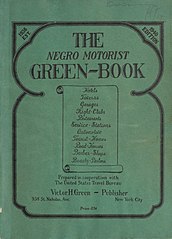
Cover of the 1940 edition, via Wikimedia Commons.

From the National Trust comes a timely tie-in to African American History MonthThe Green Book. This guide was aimed at providing tourism guidance to African-Americans, directing travelers to restaurants, hotels, and leisure spots that would serve them between 1936-1967. Read more and watch the video on the National Trust’s site, and you can catch the debut of the documentary mentioned in the video on February 25 on the Smithsonian Channel.

As mentioned in the video interview, the directories themselves have been digitized and made freely available online at the New York Public Library. As you might guess, Winchester has a few entries, both familiar to us and new – the 1947 book includes the staples of Ruth’s Tea Room on Cecil St. and Hotel Evans on Sharp St., but also a tourist home operated by Mrs. Joe Willis on North Loudoun (no address given), and the Dunbar Tea Room and Tourist Home at 21 W. Hart (now demolished; two other photos are available from us on Flickr shortly before the building came down). We have not looked through all of the available books to check Winchester’s entries, so let us know if you find something intriguing.

Friday Roundup: Anniversaries, Events, and More

Winchester celebrates 275 years!

PHW was in attendance for the kickoff press conference on Winchester’s 275th Anniversary on Wednesday. As you know, we are working on touching up the Limestone, Sycamores & Architecture book for reprinting this year as part of the celebration, as well as chipping in with a few other things along the way (probably involving some big event we usually have in December…). There will be many great activities through the year, so keep an eye on the website – there is sure to be more to come!

Next week is Valentine’s Day, but for us at PHW, it is also our birthday! PHW will be turning the big 55. You might want to revisit our 50th anniversary history of PHW blog posts, which are collected here. As we concluded five years ago, “we feel we still serve an important role in the community and fill a much wanted and needed niche of providing information about historic preservation and architecture. We plan to serve the community for another fifty years. Thank you for your support and interest in PHW – we could not exist without you! “

The French and Indian War Foundation is celebrating George Washington’s 287th birthday on Friday, February 22 from 5:30 to 8:30 PM at the Half Note Lounge in the George Washington Hotel, 103 E. Piccadilly St. The event is free and everyone is welcome to attend. Delegate Chris Collins will speak at 6:30 PM. There will be a cash bar and appetizers by Chef Marvin at $20 a plate. You can find the event listing on their website for more information.

In more business related news, Preservation Virginia is keeping tabs on items moving through Virginia’s House and Senate. You may want to drop by their website and sign up for their email newsletter to stay informed. The main concern is watching the historic tax credit (likely to be capped at $5 million, but according to Preservation Virginia this previously implemented change was not a significant blow to preservation efforts) but historic African American cemetery funding, war memorials, agritourism, and land conservation are all topics being watched by Preservation Virginia.

On the Trail of James W. Burgess

Many of you who have visited the Hexagon House might recognize that name – James W. Burgess is the man who built the Hexagon House. He has always been something of an enigma, made more difficult to research by his name being fairly common and some inaccurate reporting in T. K. Cartmell’s history providing false family connections and leading us to think he was older than he was. It has taken a long time, but with the new records available digitally, much patience and a little frustration, we can shed at least a bit more light on this man and clear up a few inaccuracies we had previously reported and perhaps get this information out to Burgess family descendants for more information.

James W. Burgess was born about 1826 in Virginia. It appears that the family moved to Ohio while he was young, but returned to Virginia sometime between the 1850 and 1860 census. James married Sarah C. Harrison probably in the early 1860s and lived with his wife’s parents George and Elizabeth Harrison, as well as what we believe to be James’s sister Emma and mother Catherine J. Burgess. James and Sarah also had an infant son, William H. At the time of the 1860 census, James’s profession was listed as milling, which concurs with the Harrison family profession. In the 1850 census, he had been listed as a carpenter.

James W. Burgess purchased two adjoining parcels of land on what is now Amherst Street, one in 1867 and one in 1869, from land that had formerly belong to Hawthorne, amounting to about 4.5 acres. The Winchester Journal of January 29, 1869 says, “Mr. James W. Burgess is preparing to erect a fine house on his lot, near the town spring. He has the advantage of an elevated and beautiful situation, and will doubtless improve is so as to make it in every way desirable.” This house was, of course, the Hexagon House.

We now believe he started his furniture business in Winchester in January of 1869. While we’ve referred to him as a furniture maker or casket dealer, it seems more likely that from 1869-73 he opened his own branch of a Hagerstown business. As we suspected, his store now is confirmed to have been located “on the north side of Piccadilly, between Main and Market Streets in the building occupied by Burgess & Co. Real Estate Agents.” This also confirms the suspicions aroused by the number of times James W. Burgess has been found in deed searches shortly before and after the Civil War to the early 1870s. At this point the exact location of the furniture store and real estate office is not known, but the actual building is likely demolished and may be in the area where the Bank of Clarke County sits or an adjacent lot.

We know the family was here from the 1860s through at least 1873 or 1874, when the Panic of 1873 had made the family’s fortunes decline and the Hexagon House go up for sale and then into foreclosure. By the 1880 census, they had relocated to Ironton, Ohio, and had three sons: Frank M., George S., and Eddy M. Burgess. It appears the one year old son they had in the 1860 census had passed away; it is unknown at this time whether there were other children born between William and Frank. James, about 54 at the time of the census, was selling sewing machines, which helps explain our belief he may have been a tailor (more likely he was in the wholesale business again, like his furniture in Winchester.) His older sons were employed as a telegrapher and a bookkeeper, while the youngest was still in school. Despite his relatively young age, James passed away in 1882 in Ironton, and his death was reported locally – but only tersely – in early March. To date, we have not been able to locate his grave or a fuller obituary to obtain more details, though it seems likely he is buried in Ironton, perhaps in Woodland Cemetery, and likely died in later February to very early March of 1882. We have been unable to locate Sarah, Frank, or Eddy with any certainty in future census or grave records.

If you know more about the James W. Burgess and the family described here, please let us know any more details at 540-667-3577 or phwinc.org@gmail.com. We have long wondered why or how James chose to build a hexagonal house and what his life was like before and after his time in Winchester. Family portraits or photographs are also something that, so far, we have not found but would love to include in our tours of the Hexagon House.

Cautionary words for future researchers: As unbelievable as it may seem, there are multiple James W. Burgess of roughly the same age and in the broad geographic areas. Because of this, we are uncertain at this point whether or not “our” Burgess is one of the multiple James Burgesses who are found in Virginia Civil War soldier records. The Captain James B. Burgess that Cartmell states in his history was James W.’s son is inaccurate; his 1907 obituary states his parents as Abra(ha)m and Sarah (McCleave) Burgess. This separate family line has been much more thoroughly documented. It appears Abraham was a brother to the James H. Burgess noted as living in a “suburban home” on the east side of Winchester in Cartmell’s history. We believe James W.’s father may be William S(immons) Burgess, a brother of James H. Burgess, so the lines are related but this branch does not appear to have been documented.