Clowser House Walk and Learn Tour This Saturday!

Please join us tomorrow, Saturday, September 30 at the Clowser House, 152 Tomahawk Trail in Shawneeland at 1 PM. This free event will help introduce you to the Clowser Foundation and their efforts to save the ancestral home of one of Winchester’s pioneer families. Be sure to dress for the weather and wear comfortable walking shoes. We expect the event will last about an hour.

Directions to the Clowser House from Winchester: Head west on Rt. 50 (Northwestern Turnpike) and turn left onto Back Mountain Road (State Route 614). Proceed until you see Tom’s Market on your right. Turn right at Tom’s Market onto Rosenberger Lane (State Route 753). Take a left at the intersection entering Shawneeland onto Tomahawk Trail. The Clowser House is the brick house on the right side of the road. There is a small gravel parking lot for visitors. We hope to see you there!

Friday Photos: 3047 Windsor Lane

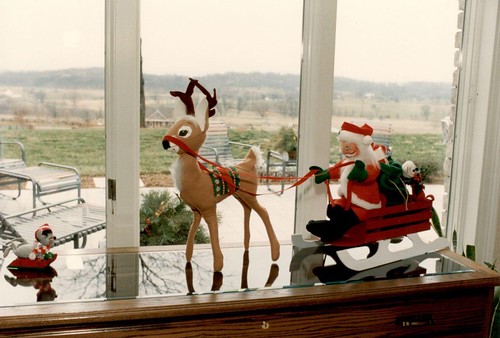
This Friday we step back to the 1991 Holiday House Tour to visit a home designed and built by the Moldens in 1988. The home has a Florida influence and an open floor plan which allows for panoramic views of the Blue Ridge Mountains, Round Hill, and Signal Knob. Keep a sharp eye out in the decorations for family antique pieces as well as various animal themes. View all sixteen images at the top of the Flickr photostream, or at the end of the 1991 Holiday House Tour album. Happy viewing!

3047 Windsor Lane

Friday Photos: Newtown Tavern

Happy Friday! Before we get to the images, mark your calendars for a PHW Walk and Learn tour. The event will be held at the Clowser House, 152 Tomahawk Trail in Shawneeland on Saturday, September 30 at 1 PM. This free event will help introduce you to the Clowser Foundation and their efforts to save the ancestral home of one of Winchester’s pioneer families. Be sure to dress for the weather and wear comfortable walking shoes.

Directions to the Clowser House from Winchester: Head west on Rt. 50 (Northwestern Turnpike) and turn left onto Back Mountain Road (State Route 614). Proceed until you see Tom’s Market on your right. Turn right at Tom’s Market onto Rosenberger Lane (State Route 753). Take a left at the intersection entering Shawneeland onto Tomahawk Trail. The Clowser House is the brick house on the right side of the road. There is a small gravel parking lot for visitors. We hope to see you there!

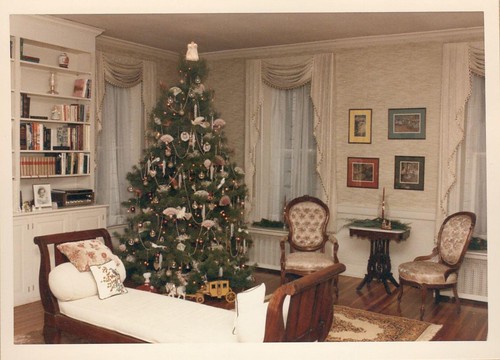
This week, we have 20 new images of the Newtown Tavern in Stephens City when it was open for the 1988 Holiday House Tour. The tavern was built in 1819 and remained in use until 1906, when it was converted to a residence. At the time of the Holiday House Tour, the Newtown Tavern was operating as a bed and breakfast. See the images at the top of the Flickr photostream.

Newtown Tavern

Friday Photos: Indian Spring

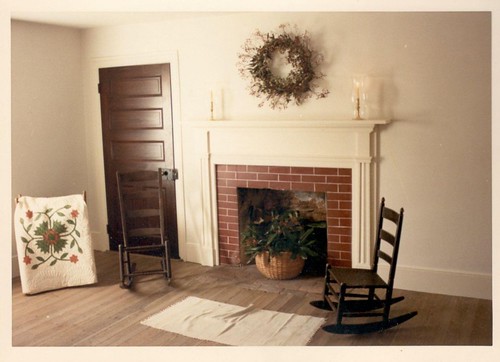
This week, we added 23 images to our Flickr account of a building known as Indian Spring from the 1988 Holiday House Tour. The site has roots back to the very earliest settlers who came with Yost Hite to the area in 1732, Jacob and Magdalena Chrisman. Much like the story of Abram’s Delight in Winchester, the original, likely log home was replaced in the 1750s by a more substantial limestone structure. The oldest part of the stone house built by Jacob Chrisman dates to 1751, as recorded in the gable. Two log buildings were also extant on the property and noted in the 1988 brochure; one of those may be Chrisman’s original dwelling.

Indian Spring

In addition to hosting some of the oldest remaining structures in Frederick County, the original 750 acre tract was also notable for the large spring, which was first called Indian Spring, and later Chrisman’s and Stickley’s Spring as the ownership of the property changed hands. In addition to being an important landmark for the area, the spring was also a hub for early religious gatherings. Bishop Francis Asbury, a famous traveling Methodist minister, was reportedly the first to use the spring for a camp meeting. T.K. Cartmell writes in his Shenandoah Valley Pioneers and Their Descendants (p. 204):

“There was an ideal place [for a primitive Methodist Camp Meeting] near the centre of the Upper Circuit . . . . The place . . . was Chrisman’s Spring . . . . The famous spring and adjacent forests were freely offered by this generous family. The oldest inhabitant to day has no recollection of the first Camp Meeting with the old tent wagons on the ground and roughly improvised annexes to offer shelter to the families who had come well provided with food. The scanty sleeping accommodations were sufficient to induce the Campers to remain on the Grounds for about ten days . . . . Kercheval says, ‘The first Camp Meeting held in the Valley in my memory was at Chrisman’s Spring . . . probably in the month of August 1806.'”

If you are interested in learning more about this important site, more details may be found in Some Old Homes in Frederick County, Virginia by Garland Quarles, p. 67-69. Other images of Indian Spring and the log building thought to be Chrisman’s original home may be found on pages 6 and 7 of Frederick County, Virginia: History Through Architecture by Maral Kalbian. Further historical and genealogical references to Jacob and Magdalena Chrisman may be found at chrisman.org and Shenandoah Valley Pioneers and Their Descendants. Christian History issue 114 is dedicated to Francis Asbury and the history of camp meetings.

Friday Roundup: Patsy Cline, Photos, Tax Credit Updates, and More!

Friday RoundupHappy Friday! There is a lot to cover this holiday weekend. First, the Celebrating Patsy Cline Block Party will be held Saturday, September 2 in front of the Patsy Cline House at 608 S. Kent St. The block party is free but tours of the house are $5. A special exhibit will be presented of an item that has not been on display before at the house. Attendees are asked to bring chairs to the event. For more information, call 540-662-5555 or visit their website.

For Friday Photos this week, we found some reference photos for the house art from Holiday House Tour 2003 and 2004. The houses are primarily on North Braddock Street, Washington Street, and Stewart Street. Check out the the 23 photos at the top of our Flickr photostream.

331 N. Braddock St.

From the National Trust comes the August and early September outlook for the Historic Tax Credit. There is information in the blog post about how to add your business or organization to a letter of support for the historic tax credit, how to check if your representative is a cosponsor for the Historic Tax Credit Improvement Act, and information on how to sign up for a webinar on the historic tax credit September 21 at 2 p.m.

From CityLab comes the article An Architectural Rescue Gone Wrong by Mark Byrnes. In short, it is a familiar story on the struggles of preserving the recent past for “ugly” buildings that don’t seem to mesh well with a “traditional” city. In an even more familiar refrain, in trying to please everyone, it seems no one is completely satisfied with the efforts to save Paul Rudolph’s Brutalist-style Orange County Government Center after decades of deferred maintenance and hurricane-related damage.

Last, A Short History of Fire Marks, The World’s Hottest Insurance-Related Antiques from Atlas Obscura is a five minute introduction of some various crests, why they were used, and resources to identify them in case you find one in your architectural travels.

Happy reading, viewing, and listening this weekend!