Noakes House Silent Auction Items: Peoples Barber Shop Sign

The reception and silent auction to celebrate the completion of the Samuel Noakes House on March 9 is drawing closer. While we count down until March 9, a number of items that will be available at the auction will be highlighted in the PHW blog.

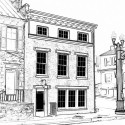
The Peoples Barber Shop sign will be available for bidding during the evening showing. The sign, which graced the Noakes house for more than 60 years, is another testament to the enduring quality and quantity of advertising from Coca-Cola.

In addition to the standard shop sign proclaiming the location of the Peoples Barber Shop, the sign features two red Coca-Cola button signs. The button signs are weathered from their many years outdoors, but are still largely intact and identifiable.

The button signs were produced by Temco, a company based in Nashville, TN. The signs, advertised as “Porcelain is Permanent,” are made from metal coated with a porcelain enamel. Signs generally ranged in size from 12-36″ and came in a variety of colors and logos.

To see learn more about the Temco Coca-Cola signs, visit www.vintagevending.com and www.collectorsweekly.com.

If you would like to own this piece of history, tickets are still available for both the afternoon and evening reception and silent auction on March 9. Remember, the People Barber Shop sign will be available only during the evening showing! Reserve your spot online via PayPal, or make your reservation by mailing in a check payable to PHW to 530 Amherst St., Winchester, VA 22601.
Afternoon Showing, 3-5 p.m. – $20 admission

Evening Showing, 6-8 p.m. – $30 admission

Noakes House Auction Items: Cold Frames

The reception and silent auction to celebrate the completion of the Samuel Noakes House on March 9 is drawing closer. While we count down until March 9, a number of items that will be available at the auction will be highlighted in the PHW blog.

Two cold frames made by PHW Board Member Nancy Murphy from windows removed from the Noakes house will be available at the silent auction. One will be available during the afternoon showing, and one during the evening showing. Cold frames are used to protect plants from excessively cold or wet conditions. It functions like a greenhouse, extending the growing season for outdoor plants. A cold frame can be used to shelter tender seedlings in early spring or as the permanent home for cold-hardy fall and winter vegetables.

The re-purposed windows show early construction methods, including historic glass and pegged construction techniques. Until about the 1940s, window frames were usually made by a specialized type of carpenter, called a joiner. A joiner’s specialty is assembling wood using traditional techniques instead of mechanical means, such as nails and screws.

The joiner would usually construct window frames using mortise and tenon joints, as seen in these windows from the Noakes House. The tenon (a peg-like protrusion of wood, generally rectangular in shape) was inserted into the mortise (the hole) to weld the two pieces of wood together. A well-crafted joint will allow for the natural expansion and contraction of wood with humidity and temperature changes without causing splitting and cracking over time.

The cold frame windows have six lights, or panes of glass. Until the 1920s, all glass making procedures were labor-intensive, hands-on jobs for skilled craftsmen. Several approaches were available to produce window glass in the 18th and 19th centuries, though none produced the optically clear and bright glass we are familiar with today. Almost all historic glass contains imperfections of waves and/or trapped air bubbles from the manufacturing methods. In addition, the early methods to produce the glass limited the potential maximum size of the panes. The windows were therefore one of the greatest expenses in early construction.

To learn more about the historic construction techniques of windows, particularly glass and early carpentry, you may be interested in visiting The Colonial Williamsburg Foundation, Restoration Glass, and www.motherbedford.com/GlassTax.htm.

If you would like to own this practical, “up-cycled” piece of history, tickets are still available for both the afternoon and evening reception and silent auction on March 9. Reserve your spot online via PayPal, or make your reservation by mailing in a check payable to PHW to 530 Amherst St., Winchester, VA 22601.

Afternoon Showing, 3-5 p.m. – $20 admission

Evening Showing, 6-8 p.m. – $30 admission

PHW Announces Spring 2013 Lecture Series

PHW is pleased to announce it has launched a series of educational lectures for 2013. Bring your own lunch or buy a boxed lunch in advance through PHW and join us at noon for these free seminars.

All lectures will be held at the main floor conference room located off the upper parking lot at the Lewis-Jones Knitting Mill, 126 N. Kent Street, Winchester, VA unless otherwise noted. Additional parking is available at the George Washington Autopark, 131 N. Kent Street.

March 14th
“How to Stay Warm and Retain Historic Integrity with Modern Storm Windows”
Jay Reyher, President, Quanta Technologies (manufacturers)
This lecture is approved for 1.00 hours of LU and HSW credits through AIA.

April 16th
“How to Repair and Restore Historic Brick and Mortar”
Leroy Danforth, Architectural Outreach Manager, The Brick Industry Association
This lecture is approved for 1.00 hours of LU and HSW credits through AIA.

May 7th
“The Virginia Department of Historic Resources; Putting Virginia’s History to Work”
David Edwards and Joanie Evans, Virginia Department of Historic Resources

May 15th
“How to Utilize State and Federal Historic Tax Credits”
John Willingham, Developer and Winchester City Council President
To be held in the basement bar of the Knitting Mill, 126 N. Kent Street